The Subtle Signs Your Nervous System Is Stuck in Survival Mode
Apr 19, 2026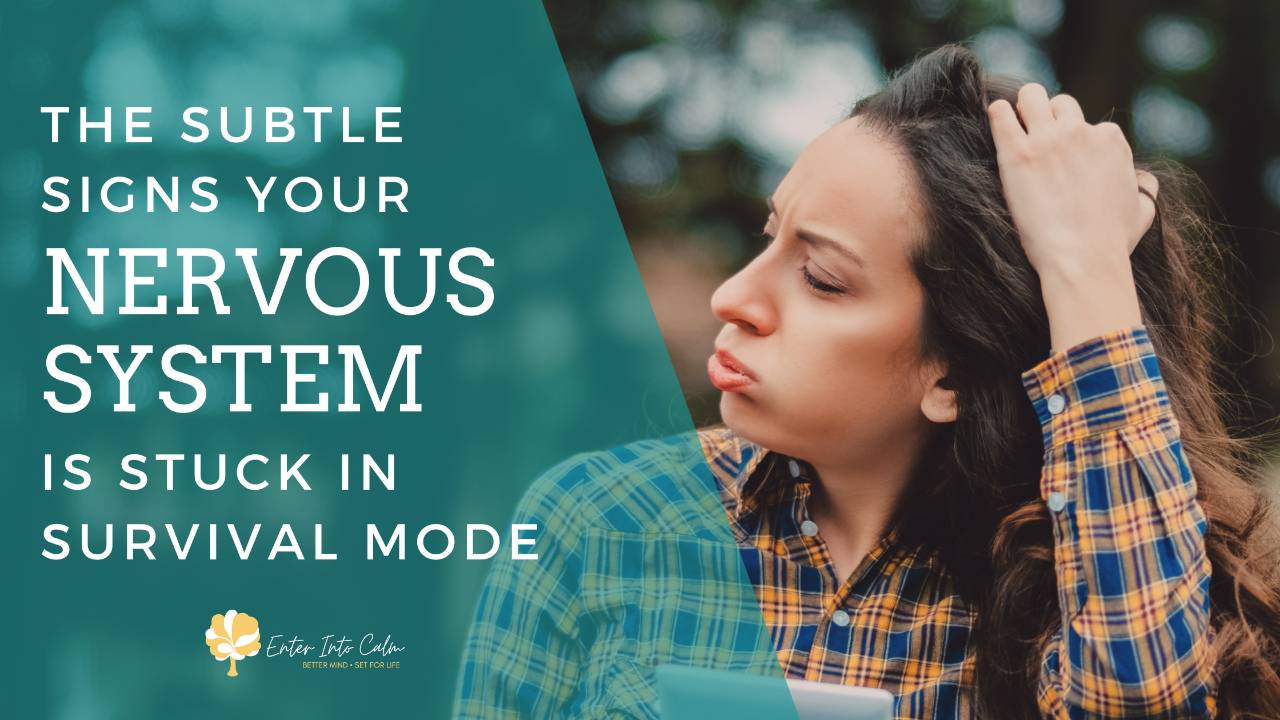
You might not call it stress. You might call it… “just a busy season” “part of the job” “what healthcare is right now”
And yet… something feels off.
You’re tired—and sleep doesn’t fix it. You finally sit down—and your body doesn’t relax. You’re home—and your mind is still at work.
It’s subtle. And it builds slowly.
Until one day, your body is living in a state it was never meant to stay in:
Survival mode.
What Survival Mode Actually Means (In Your Body)
Your nervous system is designed to protect you.

When something stressful happens, your body shifts into activation:
- Heart rate increases
- Stress hormones rise
- Focus sharpens
That’s helpful… in short bursts.
But in healthcare, the stress doesn’t come in short bursts.
It’s constant.
And over time, your system stops returning to baseline.
Research shows that chronic occupational stress in healthcare workers leads to autonomic nervous system dysregulation, often reflected in reduced heart rate variability (HRV)—a key marker of the body’s ability to recover and regulate itself (Jarczok et al., 2013; Borchini et al., 2018).
In simple terms:
Your body forgets how to come down.
And when your system has been in that pattern long enough, it can start to feel like your new normal—even though it isn’t your baseline.
If you want to understand what it looks like to begin shifting out of that state, this is a helpful place to start.
The Signs Most People Miss
This isn’t always obvious burnout.
It’s quieter than that.
You might notice:
- You feel “wired and tired” at the same time
- You can’t fully relax—even when nothing is wrong
- Your patience is thinner than it used to be
- Sleep doesn’t feel restorative
- Your body feels tight, tense, or on edge
- You’re more reactive… and less like yourself
These are not personality flaws.
They are physiological patterns.
Studies show that prolonged stress shifts the body toward sympathetic dominance—meaning your system stays in “go mode,” even when you’re trying to rest (Järvelin-Pasanen et al., 2018).
And here’s the part most people don’t realize:
You can feel “functional”…
and still be deeply dysregulated.
Feeling more exhausted than you realize?
Many providers miss the early signs of burnout until their body demands attention.
Download the free guide: Early Signs of Burnout Most Providers Miss
Why Awareness Matters
Many healthcare professionals underestimate their own level of exhaustion.
In fact, research shows a disconnect:
You can recognize burnout in others…
and miss it in yourself (Sexton et al., 2022).
Because you’re still showing up.
Still caring.
Still doing your job.
And your unconscious mind adapts.
It normalizes the tension.
The speed.
The constant output.
Until survival mode feels like your personality. And for many people, the shift begins when they realize this isn’t who they are—it’s a pattern their system learned… and patterns can change.
This Isn’t Just Mental—It’s a Mind-Body Loop
Chronic stress doesn’t stay in your thoughts.
It moves through your entire system:
- Hormonal changes (HPA axis activation)
- Elevated heart rate and blood pressure
- Changes in emotional regulation
- Increased anxiety and irritability
(Levine et al., 2021; Vrijkotte et al., 2000)
Your body is responding exactly as it was designed to.
Just for too long.
So What Actually Helps?
Not just “taking a break.”
Not just thinking differently.
Your nervous system shifts through experience.

Research supports interventions that work with both mind and body:
- Breathwork and meditation
- HRV biofeedback
- Mindfulness-based practices
These approaches can improve emotional regulation and restore balance in the autonomic nervous system (Cantone et al., 2025; Korkmaz et al., 2024).
These approaches often work best when they’re experienced—not just understood. And when combined with other supportive care, they can create a more complete shift in how the system responds over time.
And something often overlooked in clinical settings…
Play. Movement. Expression.
Because your nervous system doesn’t reset through logic.
It resets through felt experience.
Body-based play has been shown to:
- Improve stress tolerance
- Restore emotional capacity
- Increase joy and connection
And even more powerfully…
It can help restore something many clinicians quietly lose:
Compassion.
A Different Way to Understand What You’re Feeling
You’re not “too sensitive.”
You’re not “burning out for no reason.”
Your system has been carrying more than it was meant to hold—without a way to fully process or release it.
And your body is asking for something different.
Not more effort.
Not more pushing.
Something deeper.
There Is Another Way to Work With Your System
There are spaces designed specifically for this kind of work.
Not as treatment.
Not as therapy.
And not as something that replaces your clinical care.
But as a guided, supportive experience that helps you reconnect with your body, your awareness, and your internal capacity for regulation.
That’s part of what we explore inside the Rooted HEART Intensives.
A place where:
- You can slow down safely
- You can understand your patterns
- You can experience your nervous system differently
And begin to shift it.
Gently.
At your pace.
Because what the mind conceives…
the body can begin to experience.
And from there—everything starts to change.
Moving Forward
Understanding your nervous system differently is a powerful first step.
And most healthcare professionals already have insight…
What’s often missing is the space to actually experience something different in their own body.
Not just thinking about calm…
and actually feeling it.
This is the kind of work we explore inside Calm Collective Care.
Through guided sessions, group experiences, and practical mind-body approaches, you can begin to work with your system in a way that feels structured, grounded, and supportive.
Some people start with group experiences…
Others prefer a more personalized space.
And some feel ready for a deeper, immersive reset—where they can step away from the constant demands and reconnect more fully.
You don’t have to decide what that looks like right now.
You can simply notice what resonates…
When ready to explore deeper one might consider Rooted HEART Resilience Intensive. A 5-night, in-person experience designed specifically for healthcare professionals.
Inside this space, you’re not just learning about regulation—
You’re experiencing it.
Through practices that include:
- breathwork
- sound
- guided inner awareness
- movement and experiential processes
And a supportive environment where you don’t have to hold everything together.
You don’t have to decide anything right now.
And if something in you is curious—
That’s enough.
Because what you focus on…
your system begins to move toward.
And every day, in every way—
You can begin to feel a little more like yourself again.
Ways to Get Started
Guided Group Hypnosis
We offer live, guided group hypnosis sessions designed to support stress reduction, confidence, emotional regulation, and nervous system resilience. These sessions provide a structured, supportive environment for experiential learning—whether you join live or explore our growing audio library.
👉 Learn more Group Session in the Change Your Life Circle
👉 Access the ever-expanding Audio Library
One-on-One Hypnotherapy
For a more personalized approach, working individually with a certified hypnotherapist allows for tailored support aligned with your specific goals, history, and nervous system patterns. You can explore our team of practitioners and schedule a consultation to find the right fit.
Guest Author:
Christy is dedicated to helping clients overcome anxiety, depression, and phobias by using evidence-based hypnosis and NLP techniques. With a focus on addressing the root causes of mental health challenges, she provides tailored strategies that promote emotional resilience and lasting well-being. Drawing on her extensive background in anesthesiology and psychiatric mental health, Christy creates a safe, supportive environment where clients can achieve mental clarity, boost their confidence, and break free from limiting fears.
References:
- Borchini, R., Veronesi, G., Bonzini, M., Gianfagna, F., Dashi, O., Ferrario, M. M., & Cesana, G. (2018). Heart rate variability frequency domain alterations among healthy nurses exposed to prolonged work stress. International Journal of Environmental Research and Public Health, 15(6), 1130. https://doi.org/10.3390/ijerph15010113
- Cantone, E., Urban, A., Perra, A., et al. (2025). Enhancing wellness: A systematic review of biofeedback interventions for healthcare professionals. Frontiers in Psychiatry. https://doi.org/10.3389/fpsyt.2026.1761371
- Järvelin-Pasanen, S., Sinikallio, S., & Tarvainen, M. P. (2018). Heart rate variability and occupational stress—Systematic review. Industrial Health, 56(6), 500–511. https://doi.org/10.2486/indhealth.2017-0190
- Jarczok, M. N., Jarczok, M., Mauss, D., Koenig, J., Li, J., Herr, R. M., Thayer, J. F., & Fischer, J. E. (2013). Autonomic nervous system activity and workplace stressors—A systematic review. Neuroscience & Biobehavioral Reviews, 37(8), 1810–1823. https://doi.org/10.1016/j.neubiorev.2013.07.004
- Korkmaz, A., Bernhardsen, G. P., Cirit, B., et al. (2024). Sudarshan Kriya Yoga breathing and a meditation program for burnout among physicians: A randomized clinical trial. JAMA Network Open, 7(1), e2350000.https://jamanetwork.com/journals/jamanetworkopen/fullarticle/2814344
- Levine, G. N., Cohen, B. E., Commodore-Mensah, Y., et al. (2021). Psychological health, well-being, and the mind-heart-body connection: A scientific statement from the American Heart Association. Circulation, 143(10), e763–e783. https://doi.org/10.1161/CIR.0000000000000947
- Sexton, J. B., Adair, K. C., Proulx, J., et al. (2022). Emotional exhaustion among US health care workers before and during the COVID-19 pandemic, 2019–2021. JAMA Network Open, 5(9), e2232748. https://doi.org/10.1001/jamanetworkopen.2022.32748
- Vrijkotte, T. G. M., van Doornen, L. J. P., & de Geus, E. J. C. (2000). Effects of work stress on ambulatory blood pressure, heart rate, and heart rate variability. Hypertension, 35(4), 880–886. https://doi.org/10.1161/01.HYP.35.4.880
- Sánchez, C., Valdez, A., & Johnson, L. (2014).Hoop dancing to prevent and decrease burnout and compassion fatigue. Journal of Emergency Nursing, 40(4), 394–395. https://doi.org/10.1016/j.jen.2014.04.013
Be Calm ...
and experience hypnosis!
Hypnosis can help in many ways. Curious Minds should Stay Curious.
Boost Self-confidence • Lessen Anxiety • Grief• Cancer • Create Positive Mindset • Eliminate Limiting Beliefs • Improve Sleep • Manage Pain Better • Prepare for Childbirth • Enhance Performance • Heal & Resolve Grief • Change Habits • Weight Loss without Dieting • Smoking Cessation • Stress Reduction • Stop Teeth Grinding • & more
Connecting with me 1:1 is fast and easy!
